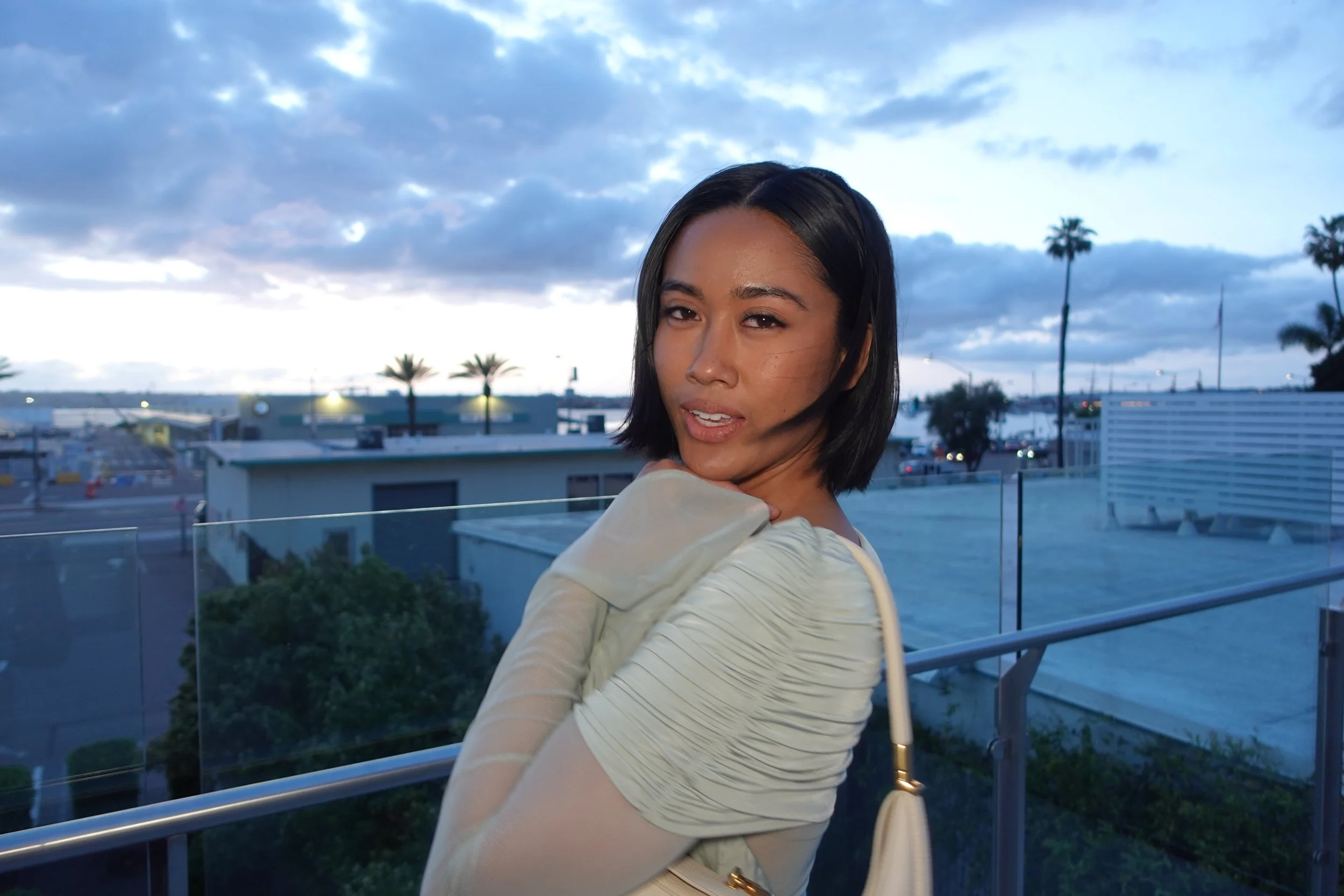
Progress Over Perfection: Filipino Food, Health, and Mindfulness with Darlene Nacional
It's a common, if unfortunate, joke that the "Filipino trifecta" of ailments includes gout, diabetes, and some form of heart disease. It feels less like a matter of if a family member will get them, but when. Without fail, at any given time, I see my uncles hobbling because of gout attacks and my aunts rocking some slides because their feet are too swollen for normal shoes!
I consider myself a bit of a hippie. So, when my doctor warned me that I was pre-diabetic and at risk for heart disease due to my family history, I knew I had to act. That was the wake-up call I needed to make serious lifestyle changes and reverse the damage before it was permanent. I was determined not to end up on lifelong prescription drugs. My solution was to transition to a more plant-based diet, which meant eliminating animal meat and products. I even tried creating vegetarian and vegan versions of my favorite Filipino food, which often earned me ridicule. My own father once teased, "What does tinola taste like without chicken?"
That's why I'm thrilled to report that I'm not alone in this journey! I always get a boost of excitement when I meet other health-conscious Filipino-Americans. Today, I'm introducing you to Darlene Nacional, a content creator dedicated to showing us how to eat healthily without sacrificing our cultural heritage. She champions small lifestyle adjustments and increased mindfulness. This is especially vital post holidays, a time when we typically overindulge and settle into "hibernation mode." I know most of us state that the “diet will start on Monday or in January — new year, new me.” But let’s be real… I’m checking in to see who fell off already? It’s totally OK if you did! It’s about progress, not perfection.
Keep reading to discover more about implementing healthier choices and becoming more mindful in your life.
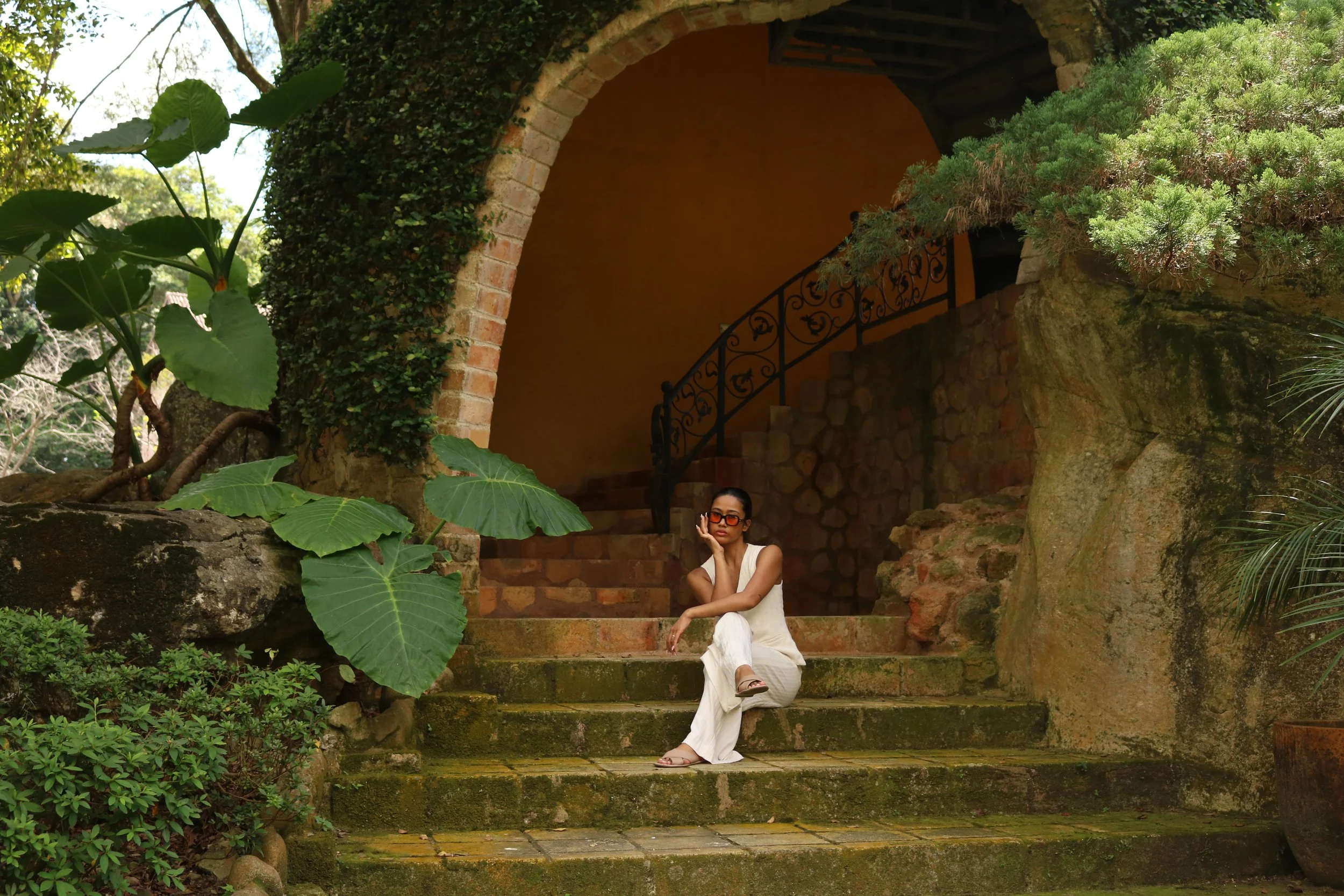
1. Tell us about yourself.
Darlene Nacional: My name is Darlene Nacional. I am a “jill” of all trades. I have many different interests from dancing to reading and so many other things but my focus for this specific interview is health, wellness, fitness and nutrition. I was born and raised in San Diego, California. I graduated from California State University, San Marcos with a business degree with an emphasis in accounting. In college, I took a few nutrition classes, and that turned into a side quest of me becoming a certified nutritionist specialist. At first I was just taking classes to fill in some credits because I wanted to become a Certified Public Accountant (CPA).
I used to think I’m not a creative person at all. Eventually, I landed a big girl corporate career at one of the “big four” firms as a tax accountant. That’s when I lost all sense of creativity. I even developed social anxiety amidst COVID. In my last 6 months of that job, I was in the mindset of either quitting or getting fired because I just couldn’t handle it anymore. I was prolonging the decision to switch into industry or do something more creative.
Over time, I realized that I like the fitness and nutrition path much better than accounting. When I started this journey, I knew that I could always fall back on being an accountant if things don’t work out. But truthfully, that is my nightmare.
2. What did you do after you were let go from corporate America?
Darlene Nacional: I was so stuck at that time and I wished that there was more honesty about what it’s really like to work for one of the big four. After I got let go, I started a podcast called “Before and After”. I interviewed people that were currently at one of the big four firms, as well as people that switched to industry or something completely different — one gal transitioned to become a comedian in Australia!
I started to look into all of my passions and interests. I had a cacao business. I love chocolate and understanding single origin chocolate. I did the whole entrepreneur thing and I was also making content about whatever came to mind. I finally narrowed down to food content, but wasn’t really sure people wanted to see Filipino food so I started out with the generic food content that you see on chicken, salmon, oatmeal.
3. When did you start to make content about Filipino food?
Darlene Nacional: The type of content that I currently make is targeted towards Filipino Americans, but has expanded to Filipinos in general. I love to create content that goes over health, Filipino nutrition, fitness, and of course my lifestyle side quests. My main focus right now is really making sure my message is consistent: you don't have to give up your culture in order to eat healthy. Sometimes all you need to do is adjust.
Whenever I search for Filipino food online, the typical party foods pop up (adobo, lumpia, etc.). They’re so good and everyone loves them, including me. Many of my cousins declared one week, "I can't eat Filipino food anymore. It's not healthy. I'm on a fitness path now and only eating specific things."– which by the way, wasn’t Filipino food. Online we mostly see Asian content creators showcasing what they ate, which was still mostly American health foods.
I found that interesting because I grew up eating Filipino food, though I didn’t recognize how healthy it was. That’s how I narrowed down my message to: you can eat Filipino food and it is healthy. It can be part of a healthy lifestyle.
I started to make content about how to make Filipino food healthy without having to eat just kale salad, quinoa, oatmeal and protein shakes. When I started to make and post different content, it really hit home with a lot of people. I just continued to make content and got a lot of good feedback. People were telling me that, "I've never heard somebody say this before." Or, "Thank God someone's finally saying it. I've been trying to tell everybody." And on the flip side, I'm also being accused of lying and stating that I am sharing misinformation. My response is: "All right, this is a good conversation for all of us to keep having.”
4. What perceptions did you have of Filipino food growing up?
Darlene Nacional: Growing up my family was very vegetable forward, but because I hadn't seen it reflected in American media, I didn’t think Filipino food was healthy. What I did see in the American media was kale salads, chicken breast, broccoli, and sweet potatoes.
Unlike my cousins, I felt that Filipino food was healthy. Growing up, I ate a lot of vegetable heavy Filipino dishes like sinigang, tinola, and mongo. You can choose to make your dishes completely plant-based or perhaps switch to using leaner cuts of meat.
5. What are some healthy swaps that folks can make?
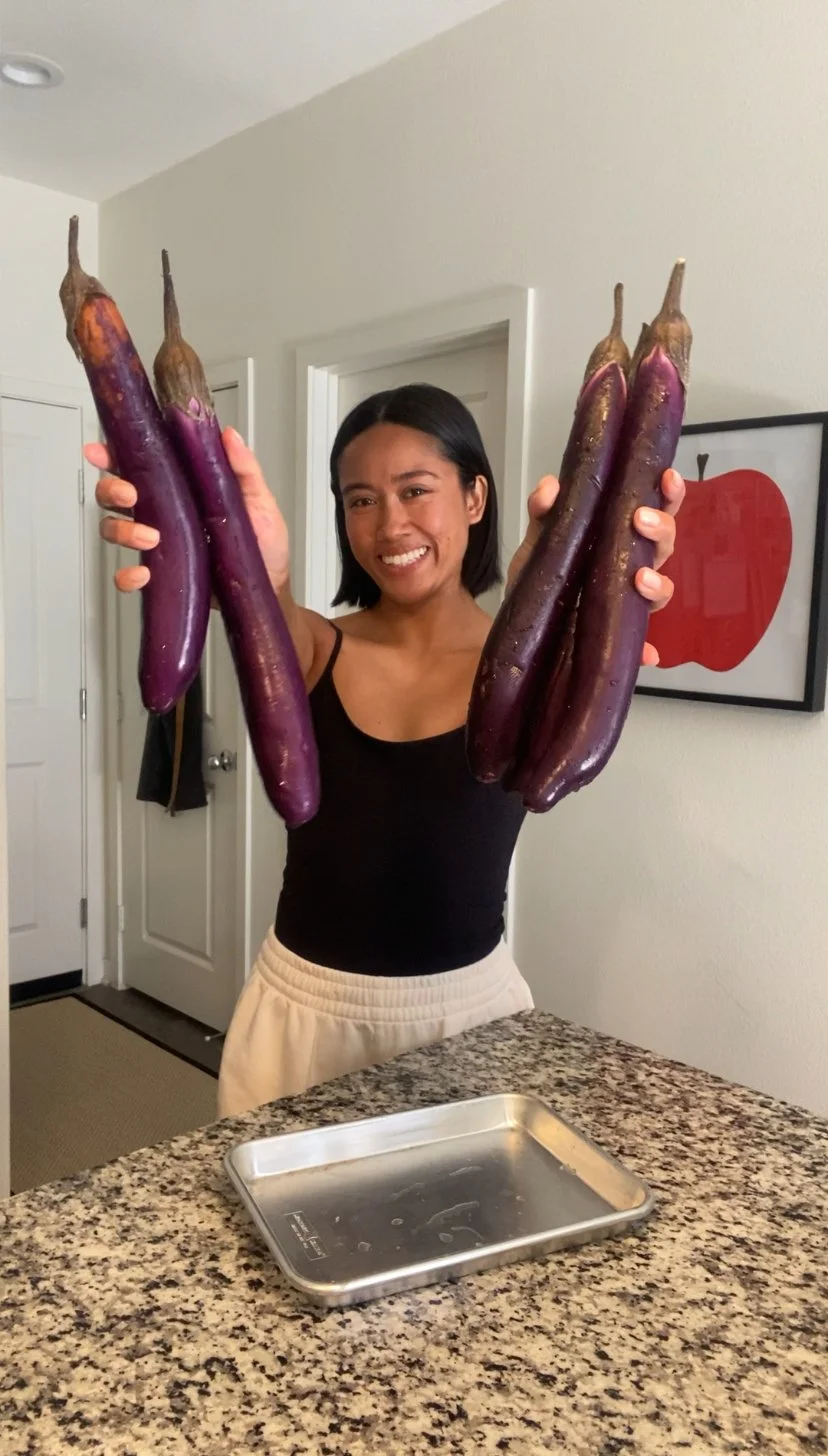
Darlene Nacional: I love tortang talong (eggplant egg omelette)! It’s easy and fast to make. A few things to be mindful about is how you cook your food or what type of food you consume. Filipinos tend to deep fry with lots of oil. I try to get away with using as little oil as possible. Of course, when I fry, I use a paper towel to drain the excess oil. I like to pair tortang talong paired with steamed camote leaves (sweet potato), fresh tomatoes with onions. I love spiced vinegar. It goes well with rice.
Sinigang is another really good meal that I love. For protein, I like to make it with fish. It’s the healthiest version you can make. Swap the meat with fish or shrimp. If you have access to whole food ingredients like green tamarind, kamias (bilimbi) or any sour agent like lemon or calamansi, use that! I'm not going to lie though, I use the seasoning packet. You have to be mindful about the amount that you use and the amount that you’re consuming. One of my cousins uses two seasoning packets for sinigang, which in my opinion is way too much.
For an everyday lifestyle, a lot of the adjustments can be made by watching your saturated fat intake. So instead of using pork belly, you can use pork loin or tri tip for beef. Or switch from meat to seafood. For fish, there’s a lot of variety from salmon, pampano, milk fish, and sea bass.
Most of all, you need to be mindful of your portion sizes. When I observe how my family eats, I notice that there’s almost this scarcity mindset – you have to eat everything, very fast, and not think about anything else. But afterwards, they're like, "Oh my God, I ate so fast. Oh, I'm so full." And it's uncomfortable! Being mindful really goes a long way.
6. What influenced you to become more mindful about your eating?
Darlene Nacional: I'm lucky in that I have a pretty supportive family. I have been blessed with a grandma that is currently 95 years old, and my other grandma just turned 92! How could this be if “Filipino food is so unhealthy” according to my cousins? Just look at our grandmas! Obviously, longevity comes with a lot of other lifestyle practices. Both my grandmas walked a lot. They didn’t have to sit in a car, sit down to work, eat, and sit down some more type of lifestyle.
For the most part, my grandma is pretty quiet, but she does get very expressive when people comment that Filipino food is unhealthy. Her rebuttal was, “No, no! We like bittermelon in our house.” That’s something that grew on me as I got older. When I was a kid, I didn’t like bittermelon.
It wasn't until I started college courses when I closely observed my diet for about a week or two for one of my nutrition classes. It was part of our assignment. I got one of the highest rankings in nutritional values in my meal. I was eating tinola, sinigang, mongo, and bitter melon. So many of the vegetables that I was eating were not in the system so I had to find replacements for them. Instead of kangkong, I replaced it with spinach.
7. Are you starting to see a shift in your friends and family’s eating and lifestyle?
Darlene Nacional: Yes! My cousins and friends are now sending me photos of their rendition of Filipino dishes. They also send me messages about how I’ve inspired some of their friends to make healthy dishes like laing, based on the videos I posted on social media.
Putting my lifestyle out there inspires them and then in turn I've found that it also inspires other people to continue it. I’ve also found that the younger generations aren’t even eating Filipino food at all. Being in America, we are exposed to so many cultures and diverse food, that for them, it’s not top of mind. Over the years, their parents aren’t cooking Filipino food and not teaching them either. Unfortunately, if we don’t continue to teach and pass on these recipes, we’re going to lose our culture.
We're the first generation born and raised in the United States, and it's already going to be gone! That thought made me upset, and that’s why I’ve taken action. I’m engaging in conversations where my family and friends are starting to view things differently – starting with changing the narrative in our head that Filipino food is unhealthy. Filipino food can be very vegetable forward. If you want to make it vegan, you can make it vegan. I've also tried making sinigang with lentils or mungo beans. It tastes a little different, but the lentils and beans paired with rice creates a complete protein. You can also use tofu as a source of protein.
8. Do you still eat rice?
Darlene Nacional: Of course, of course. What? What kind of question is that?
Jennifer Redondo: White rice?
Darlene Nacional: Yeah, I do! I do want to note because I know that some people are diabetic, so this is where being more mindful of your portions comes into play. It takes a bit of an extra effort, but you don’t have to cut it out completely. Growing up, my dad always had a mountain of rice on his plate! It was the main thing on his plate. Luckily, my dad is very active and liked to run so he was able to burn it off. For the average person, more than likely that won’t work because he/she isn't expending that much energy.
9. What are you currently working on?
Darlene Nacional: Right now I am really working on making sure I am present on several social media platforms: YouTube, Tik Tok and Instagram.
I just relaunched my YouTube. I’ve received several feedback from my followers, requesting a recipe book of healthy Filipino dishes. That may be in the cards for me in the future, but for now, I am just really establishing my footing and making sure that the message is clear and concise.
Healthy eating is great and it's always the first step that a lot of people take. But it needs to be paired with an equally healthy lifestyle, especially in today's environment where there's a lot of remote work. So, it's a lot of sleeping, eating, getting in your car, sitting down at your office, getting back in your car, and you're not moving your body. So, when you think of my grandmas who are 95 and 92, when they were our age, they were walking miles to get to work. During their walks to school, they would pick fresh fruit and vegetables off the trees or in their gardens. They were eating real whole foods, not microwavable meals. It was real food off of the land. We need to find a path back to it. You don’t really need a gym membership. You can start with walking. You can walk anywhere! Pairing movement with diet is where you’ll see the most results when they’re applied together. I would love people to understand that it truly is a lifestyle. You can’t outwork a bad diet.
10. Where can people find you?
Darlene Nacional: Instagram is the one that's really been the biggest one so far. But you can find me on Instagram, YouTube, and Tik Tok.